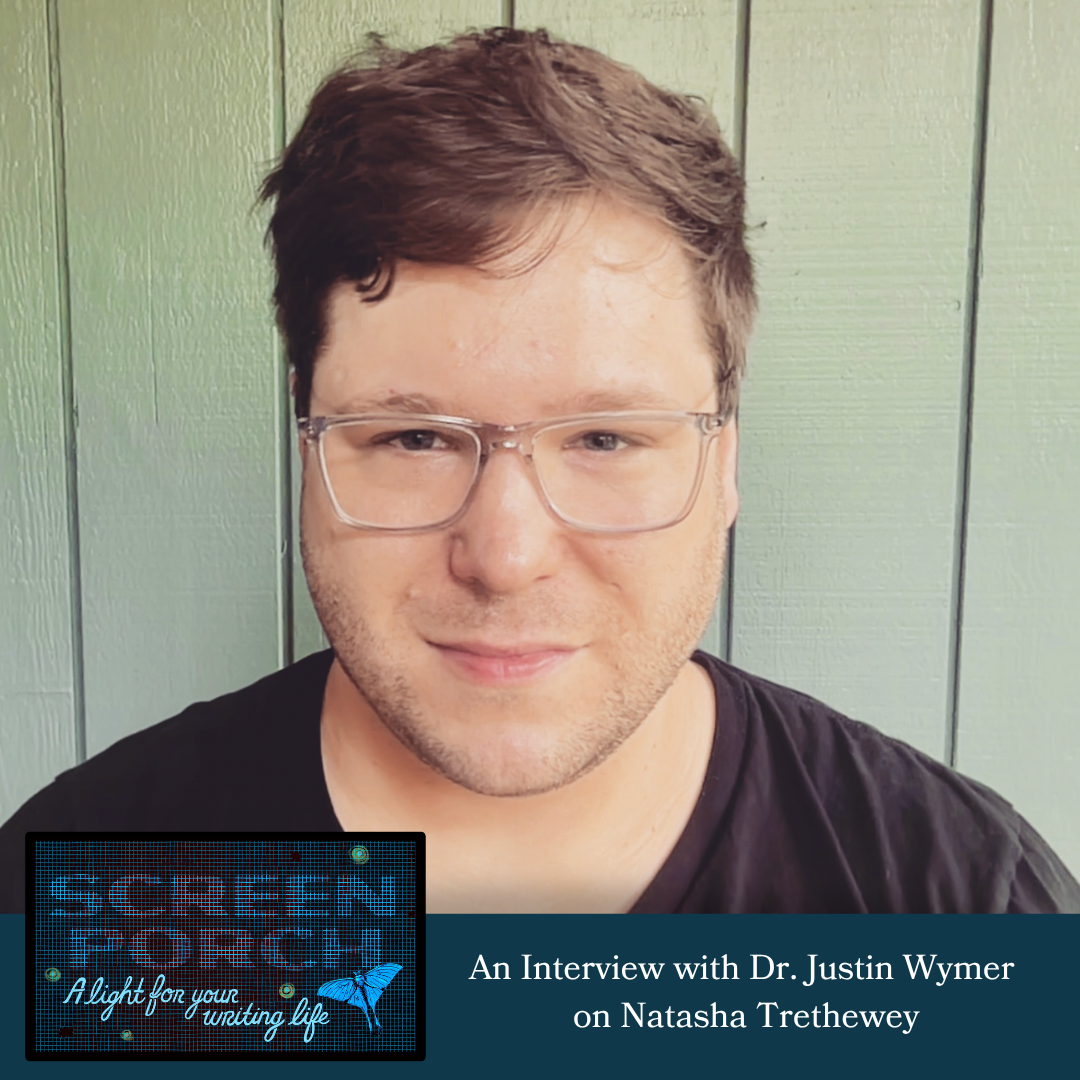
In February 2026, two-term U.S. poet laureate Natasha Trethewey visited the University of Tennessee, Chattanooga (UTC), to deliver her lecture, “The Role of the Humanities in our Personal and Civic Lives,” presented as part of the 2026 O’Dea Lecture in the Humanities series.
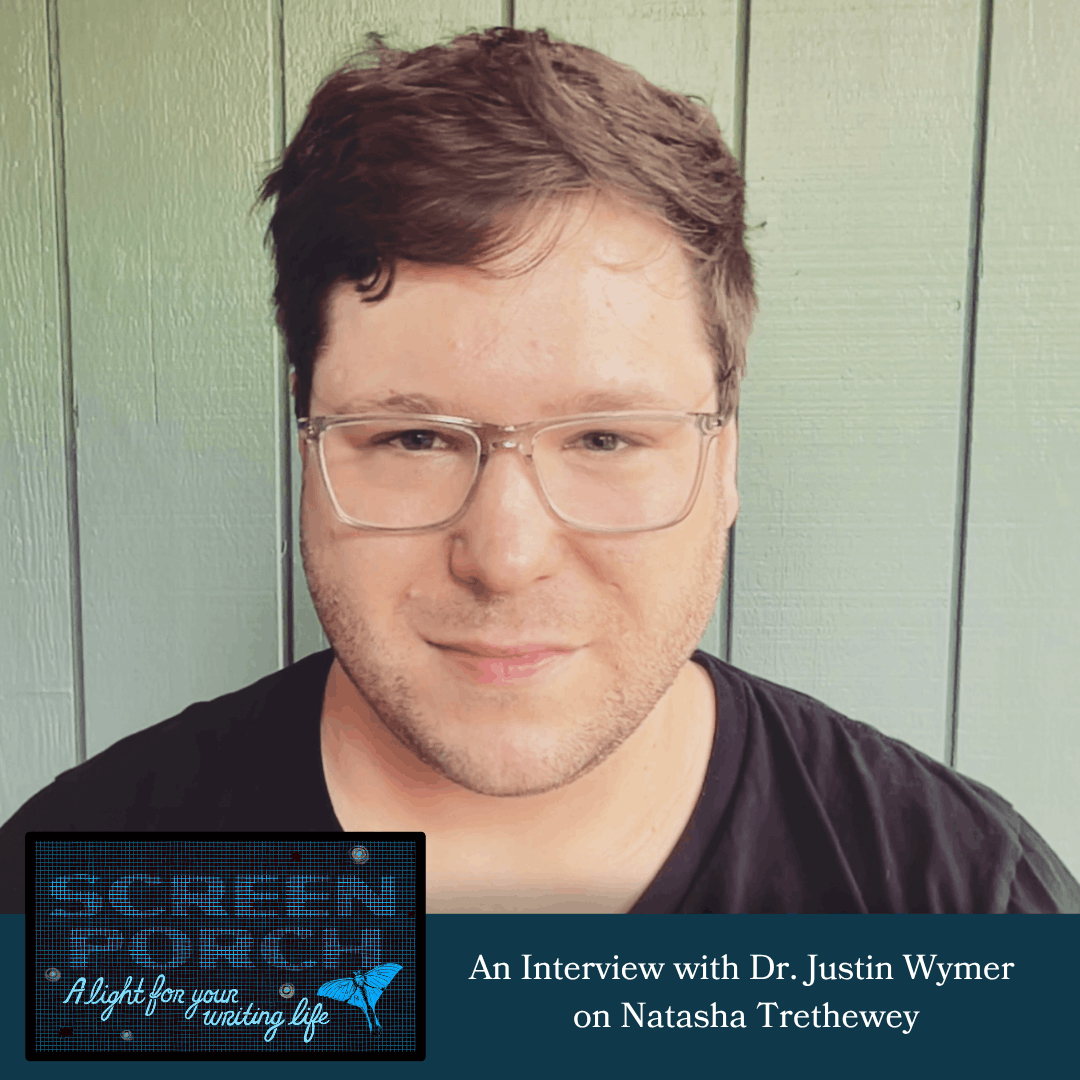
Dr. Justin Wymer, a poet and UC Foundation assistant professor at UTC, welcomed Trethewey to the stage, giving those of us in the audience far more than Trethewey’s standard bio delivers.
He described Trethewey as “a Mississippi-born resident of Chicago, a community activist and a technician of personal testimony, a gutsy innovator and rigorous formalist, and a self-proclaimed private person who feels social responsibility.”
He outlined her artistic lens in one sentence as “a writer whose work seamlessly weds the intensely personal to the politically important.”
In her lecture, Trethewey wed the two precisely. She shone a light on history while tilting it toward us, making plain her place, and all of ours, in the connective tissue that binds centuries-old narratives to the now. The responsibility she feels to her work—to point without preaching; to the work of the humanities—resounded in the room. We were, as Wymer’s introduction promised we would be, spellbound, students and community members woven together in witness.
I spoke with Dr. Wymer following her lecture. His introduction revealed a long-tended intimacy with Trethewey’s work, and I wanted to learn more about her influence on his poetics and his teachings.
Note: All pull quotes below are from the text of Dr. Justin Wymer’s written introduction to Natasha Trethewey’s lecture, rather than the interview text itself.
LD: Tell me about your connection to Trethewey, to her work.
JW: I’ve been aware of Natasha Trethewey’s work for years. [In] my MFA program, we were always trying to look at books that could teach us how to write a good [poetry] collection, and Native Guard had won the Pulitzer Prize in 2007. So in 2012, in my MFA, it was still relatively recent. Through Native Guard she does such an incredible job of crafting the personal in a way that makes it sound universal. A few years later I picked up a used copy of Domestic Work and fell in love with her work again. I’ve taught a few poems from her first collection, Domestic Work, which won the Cave Canem Poetry prize in 2000, in every one of my poetry workshops since I’ve been here at UTC. So it was a nice bout of providence that she was coming here. When it was announced she would be this year’s O’Dea speaker, I started doing more research into her and her work and found out that she is a multi-genre writer who has written a few memoirs, which I’ve not read in their entirety. But I’ve read four of her five poetry books.
I tried to start investigating: how does she do all of this in so few words? People talk about poetry being so condensed, and so difficult. It is, and yet the way she does it, it’s so cogent and understandable. It’s accessible without any of the negative connotations that come along with that word. She has a crown of sonnets in [Native Guard], palindrome poems, pantoums, she has images that repeat from beginning to end, she has ekphrasis, she has place-name poems; she’s talking about Southern history but she’s also talking about her personal history—and it’s only 46 pages long.
“She writes from the light of the wound, and form allows her to refract that light.”
LD: I wonder what you’ve heard from your students who engaged with the lecture that night. What were their takeaways?
JW: I was curious how she would be received because the assignment was to give a lecture, not just a reading of poems, and she met it brilliantly. She wove her poems and prose into the context of a larger lecture about the importance of the humanities and history, of remembering history and reckoning with history. That hybrid form could be a bit destabilizing, but the students I talked to the night of the event and afterward in class were really blown away.
“Indeed, Tretheway’s poems imagine a future where society reckons with its ghosts.”
LD: I was blown away by the grace, the humanity, really, in Trethewey’s responses during the Q&A.
JW: She’s not talking from memory. When she answers a question she’s actually interacting with you. I think that’s a testament to the fact she’s an educator. She’s someone interested in people and in actually listening to what something means instead of telling you what she thinks, you know. It had a big impact.
LD: What was your takeaway from the lecture?
JW: Something that surprised me was her incorporation of myth. I was really impressed, just captivated by her ability to move between genres, but make it all part of the same cohesive whole. She became the container that all of these sources were speaking through. Her preoccupations, I think, from her collection, Native Guard, published almost 20 years ago, still exist in her current work, in her current speech, showing that the form of that expression will change as she as a person changes even if the root interests or the root wounds or touchstones remain the same.
“[E]legant yet heartbreaking sharing of autobiography is characteristic of [Trethewey’s] work. The vulnerability of self-disclosure, of personal history, for ultimate social good is a radical move.”
During her lecture, Trethewey urged us to thoughtfully engage with history, admitting that the truth is getting harder to find. Because people are actively working to make it so.
My biggest takeaway: Keep both eyes on history. Look closer, seek archived truth harder—engage with heart. And speak your truth, historical and present, into the now.
-LD
Justin Wymer is a writer and educator from West Virginia. He’s received awards and fellowships from the Academy of American Poets, the Harvard Office for the Arts, the Radcliffe Institute, the University of Denver, and the University of Iowa. His first poetry collection, DEED, won the Antivenom Poetry Award. His new poetry collection, Let the Forest Go, is now available.