People who have gardens are obnoxious. I know this because I have one, and right now it is teeming with green, fragile starters that I created from seed and will show off to anyone who expresses interest, as well as anyone who doesn’t. Over Easter weekend, I walked a friend through my 4x8 garden beds, pointing to and naming each plant, as if she’d never seen a vegetable. Lettuce, Swiss Chard, Broccoli, Basil, Beets. She oohed and ahhed at the appropriate moments, likely just humoring me, but I didn’t really care. I was just so proud of what I’d grown.
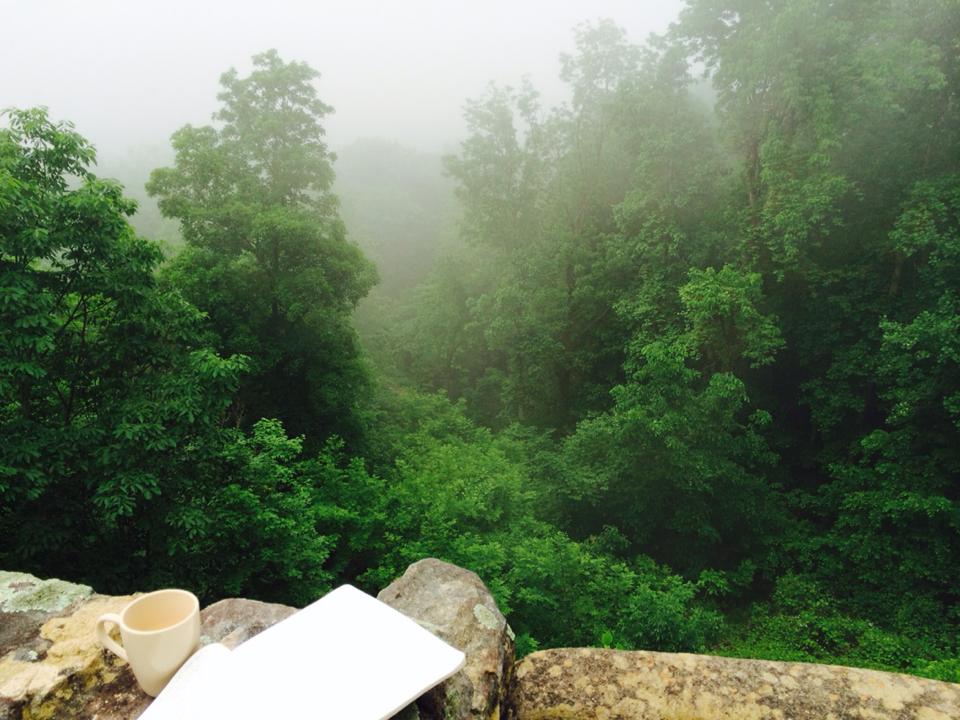
But I wasn’t always so evangelical. Just a few months ago, the old boxes were full of weeds and the winter sky offered no hope. In the bleak stretch of days after Nashville’s catastrophic ice storm, I knew I needed to get started, but the garden takes energy, and I had none to spare. Still, I took small steps forward — laying weed barrier, starting new seeds — resisting the resistance, knowing in just a few months, the beds were full of life once more.
The same goes with writing: starting over is always a challenge, but it’s especially difficult when you’ve just finished a project you loved. The blank page is just like those empty garden beds. How do you decide what to write next? How do you muster the energy to start over again?
This is a particularly important question for me at this stage in my writing career. Last summer, I sold my sophomore novel, a multigenerational family saga that took me five years to write. The novel is slated to publish in summer 2027, and will publish in translation in nine different countries. You’d think, armed with all that excitement and professional energy, I could open up a fresh new Word document and the next story would just flow.
Sorry to burst your bubble. But it doesn’t work that way. At least not for me. My mind is a garden bed in winter, full of the remnants of the last story, gray with the memory of all that past work. It’s far easier to go on a walk, wash the dishes, or attend a yoga class, than to sit before my computer, trying to find my way into a new story.
I try to think about the beginning of the writing process the way I view my garden in January. First, I need to lay a weed barrier. When it comes to writing — what are the distractions, deadly patterns, and critical voices that keep me from moving forward in a new story? I need to protect my time. No coffee dates. No yoga classes. No distractions in the hours before noon. I need to turn off the internet and toggle on my iPhone’s “Do not Disturb” setting. I need to trudge my way up the stairs to my office and sit in my seat.
The second task in re-starting the garden is creating small starters, dropping individual seeds in tiny cells filled with rich soil, protected from the outside elements in a controlled environment. In writing, this means giving myself permission to try lots of different things.
Still, when trying to decide what to write next, I’m learning to lean deeper into what worked in the past, and to avoid what I tried but hated. A few years ago, I started a novel about two married couples, one of whom divorces in the end. I hated the book. It made me sad, and so I abandoned it. And thank goodness I did. I want to write stories about real people, really trying to love one another. That’s what I’m good at, and what I enjoy most.
So far, I have the beginnings of about four different stories. No two are alike. That is okay. I have given myself permission to be bad. To write something that sucks wind. To fashion words that will never see the light of day. To waste time.
It’s tempting to let my writing group read these fledgling chapters, or to ask my agent her opinion. But that’s like planting a tiny shoot in the garden before the last frost date. Sharing my words too soon can zap the energy and life force out of something new. And the reality is, no one can decide what I write next except me. The best thing I can do is keep the light on, add words, and see which story begins to grow of its own volition.
One challenge: I am no longer a naïve to the process. I’m familiar with writing’s long hours and false-starts, it’s predictable waves of crippling self-doubt and momentary illusions of grandeur. Bring it on. These stages are part of the craft; and as Wendell Berry wrote,
Harvest will fill the barn; for that
the hand must ache, the face must sweat.
And yet no leaf or grain is filled
By work of ours; the field is tilled
And left to grace. That we may reap,
Great work is done while we’re asleep.
It is good to rest on a new idea, to give it time, and never to rush. Even in dreaming, we are working.
Easter Sunday, on the way into the house after enduring the compulsory tour of my bourgeoning garden, my friend said, “I’ve thought about starting a garden. How many hours a week would you say it takes you to do all this?” My heart sank a little in my chest. I knew if she was asking how much time it would take, gardening was probably not the right hobby for her. You have to enjoy it, lose yourself in it, forget the clock is ticking. Otherwise, it’s all a sweaty, expensive drag.
The same goes for writing, or for any hobby I suppose.
Golf, cycling, needlepoint, antiquing — the further you get into any sport or pastime, the less you count the cost to your time and resources, and the more you want others to experience the joy of watching that investment bloom into life. Like any activity, writing is a vessel that will humbly collect the minutes I devote to it. So, how do I decide what to write next? Keep going, trusting that eventually the words will grow into another story. Another novel. Another poem. Another layer to this body of work.
The only way to decide what’s next is to keep on writing.
How long will it take? Perhaps a long, long, time. But what better way could there be to spend our lives?