“Meet the Teacher” offers a quick introduction to the talented writers who teach for The Porch. Today we welcome Melissa Jean, a professor of environmental studies. She received an MFA in Fiction Writing from Lesley, and a PhD in Human Dimensions of Ecosystem Science and Management from Utah State University. Her writing has appeared in The Colorado Review, SWING, and the anthology Reckoning: Tennessee Writers on 2020, as well as a variety of online journals, including most recently Roi Faineant, Backchannels, The Hopper, Dream Geographies, Waxing and Waning, and Causeway Lit. Melissa is also a Forest Therapy Guide, certified through the Association of Nature and Forest Therapy.
Tell us about a book you've recently read and enjoyed.
I’m currently reading Is a River Alive?, the newest book by the genius of nature writing Robert Macfarlane. Every one of his books is essential reading, and this one is no exception. He frames his investigation of rivers by discussing the Te Awa Tupua Act, a piece of legislation in New Zealand that recognized the legal personhood of the Whanganui River and lent some velocity to the Rights of Nature movement, which is a movement to expand legal rights and true moral consideration beyond the human realm and into the more-than-human. As Macfarlane writes, “Unruly, fluid, and utterly other, rivers are—I have found—potent presences with which to imagine water differently. We will never think like a river, but perhaps we can think with them… Our fate flows with rivers, and always has.”
What’s one book or essay you return to again and again to help you think about writing, get inspired, etc.?
I return over and over to Verlyn Klinkenborg’s craft book, Several Short Sentences about Writing. Written in lines like one long poem, it is full of wisdom about the ways writers get in their own way and how to move. I also often use exercises and reflections from Natalie Goldberg’s Writing Down the Bones: Freeing the Writer Within. (In fact, I own a pocket-sized version of that book that travels all over the place with me.)
I have come to understand the fundamental nature of my work as giving people permission: permission to express themselves freely, to experiment, to change their minds, to trust their instincts, to lay on the lawn and look at the clouds, to try saying something in a way they’ve never heard it said before
What is your favorite writing rule to break?
I have never been a fan of the often-heard advice to “kill your darlings.” Not only does it seem like unnecessarily violent language to describe a process so benign as editing words on a page, it also teaches writers to mistrust their own likes and preferences. And being alert and attentive to the pattern of things you notice and like is key in developing your own writing voice.
While authorial attachment may ultimately need to take a backseat to the experience of the reader (which I think is the part of “kill your darlings” that is helpful advice), I’d rather come up with gentler and more joyful language to support the editing process.
Music while writing: Y/N?
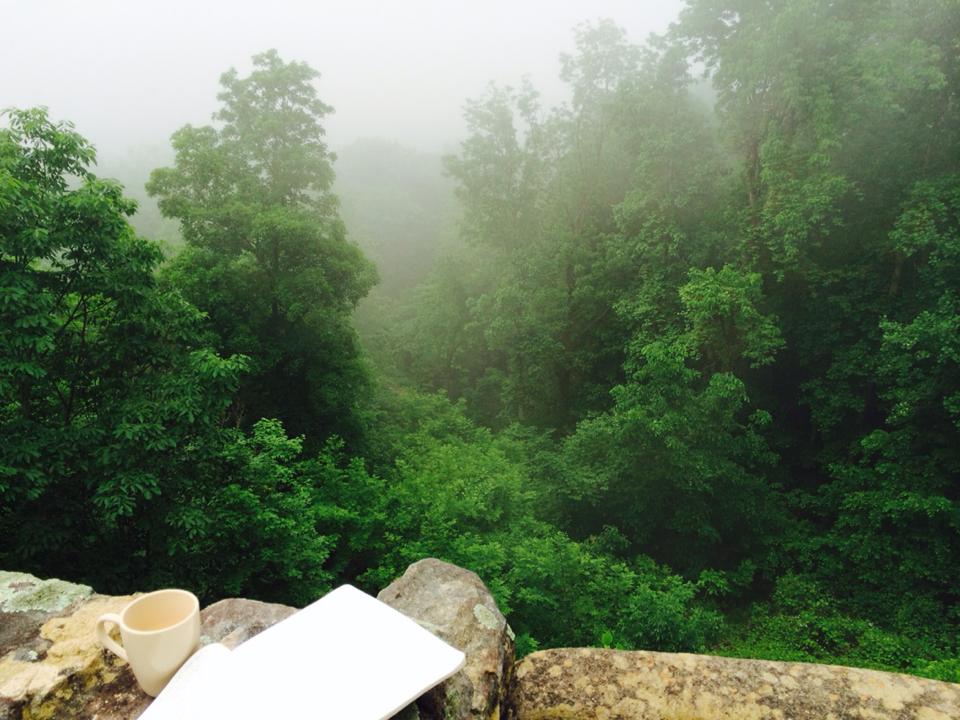
Every once in a while I’ll put some human-produced music on as an experiment, but it isn’t really my habit. That said, I most often write outside or right next to my window, with the birds just on the other side of the window pecking at birdseed and plying me with songs. So I guess you could say the soundtrack of birdsong is my favorite music to listen to as I write.
What do you love most about teaching writing?
I’ve taught writing in many different settings, from here at The Porch to graduate and undergraduate classes. In all of those settings, I have come to understand the fundamental nature of my work as giving people permission: permission to express themselves freely, to experiment, to change their minds, to trust their instincts, to lay on the lawn and look at the clouds, to try saying something in a way they’ve never heard it said before, to spend hours wandering in the woods without writing a word, to follow the golden thread of their own natural curiosity and see where it leads.
(Of course, the truth is that the permission was never really mine to give—that “writing is an act of perpetual self-authorization,” as Klinkenborg puts it—but it’s also true that many people get stuck because on some level they are waiting for permission to proceed. And I’m happy to provide that permission in a symbolic way.)
For you, why does creative writing matter?
Writing is a liberation practice. It can help us get free of our old stories and our scariest hauntings, and when it’s done with a sense of community, it can help us share our maps to freedom with other people and learn about the terrain that they are navigating. Both reading and writing are ways of expanding our worldviews and growing our empathy, and the planet needs more of that.
Tell us why you pitched your upcoming class or classes.
I’ve been teaching for The Porch for over a decade, and my classes have tended to focus on mindfulness and writing about the natural world. Some of my classes—like “Create & Calm: Writing as a Mindfulness Practice” and “Writing Like a Naturalist”—are on repeat and I’m always delighted to offer them. “Writing Like a Naturalist,” in particular, is always different; I’ve taught it several times at the Shelby Bottoms Nature Center and the class content changes depending on what season it is and what is going on outside. I have also taught classes on seasonal poetics several times—in spring, fall, and winter. (Maybe someday I’ll teach “The Poetics of Summer,” but it’s my least-favorite season, so we’ll see!) For this upcoming season I also pitched a couple of new classes: “Tarot for the Creative Writer” and “The Language of Flowers.” Developing a new class is also always a spark for my own creative fire, so I’m having fun getting my plans together for these upcoming classes.
Share something that has inspired your creativity lately, other than a book.
The answer, for me, is always going to be whatever is going on outside. The stars and the moon. The birds and trees and squirrels in my yard. The changes of the seasons and micro-seasons within seasons. I have so much curiosity about the nuances of the natural world, and there is literally endless material out there: so many landscapes to encounter, so many relationships to untangle, so many smells to smell, so many fractals to stare at until my vision shifts.